Veritable Quandary’s Late-Night Bar Menu
January 7, 2012
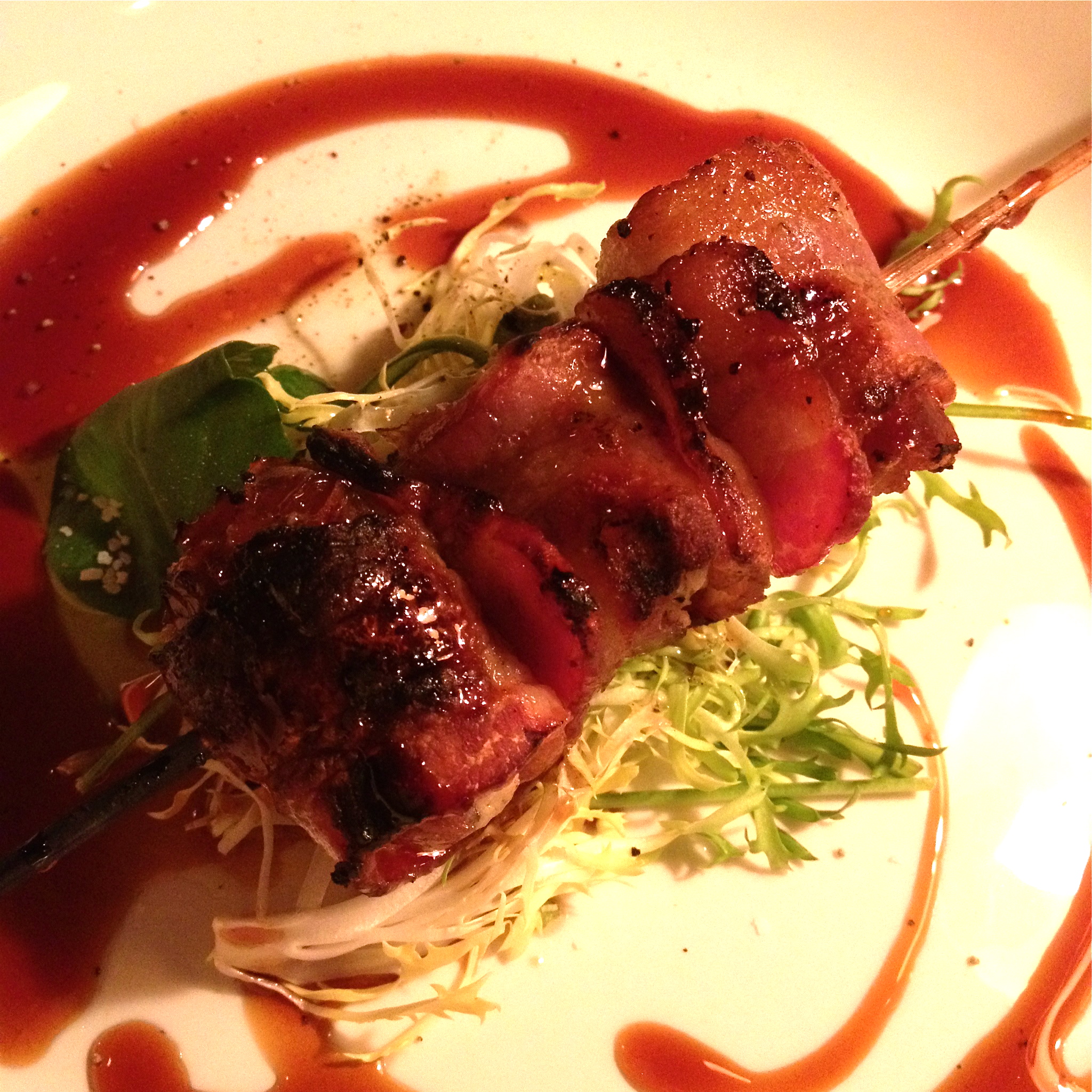
Dates stuffed with chevre, wrapped in bacon. I could eat 20 of these.
The first Tuesday in January, and we had tickets to “West Side Story” at the Keller Auditorium — a Christmas gift from J to me.
“Get cool!”
snap
snap
snap
Afterwards, we shish-ka-boom-ba’d (jazz hands!) over to Veritable Quandary to have a late-night supper from the bar menu, and were pleasantly surprised to find a lively crowd sipping cocktails and ordering food at 10:3o pm — our kind of people. What an awesome little spot this is. The vintage fixtures, high-ceilings, exposed brick walls, milk-glass light globes and high-backed wooden booths reminded me of ancient bars commonly found in Chicago. And the late-night menu doesn’t default to the fried and frozen. Instead, it’s bacon-wrapped dates stuffed with creamy chevre, crispy duck confit spring rolls, grilled flatbread pizza topped with fresh mozzarella slices and a bevy of salty Italian meats.
Though we were tempted, we resisted stuffing ourselves with rabbit pate, the Dungeness crab cake or that seductive burger, and we didn’t even consider looking at the dinner menu. Great excuse to come back, of course. “There’s a place for us … somewhere a place for us …” I think it’s at the VQ bar!
-

- Dates stuffed with chevre, wrapped in bacon. I could eat 20 of these.
-

- Duck confit spring rolls

-

- Flatbread pizza with Italian meats.

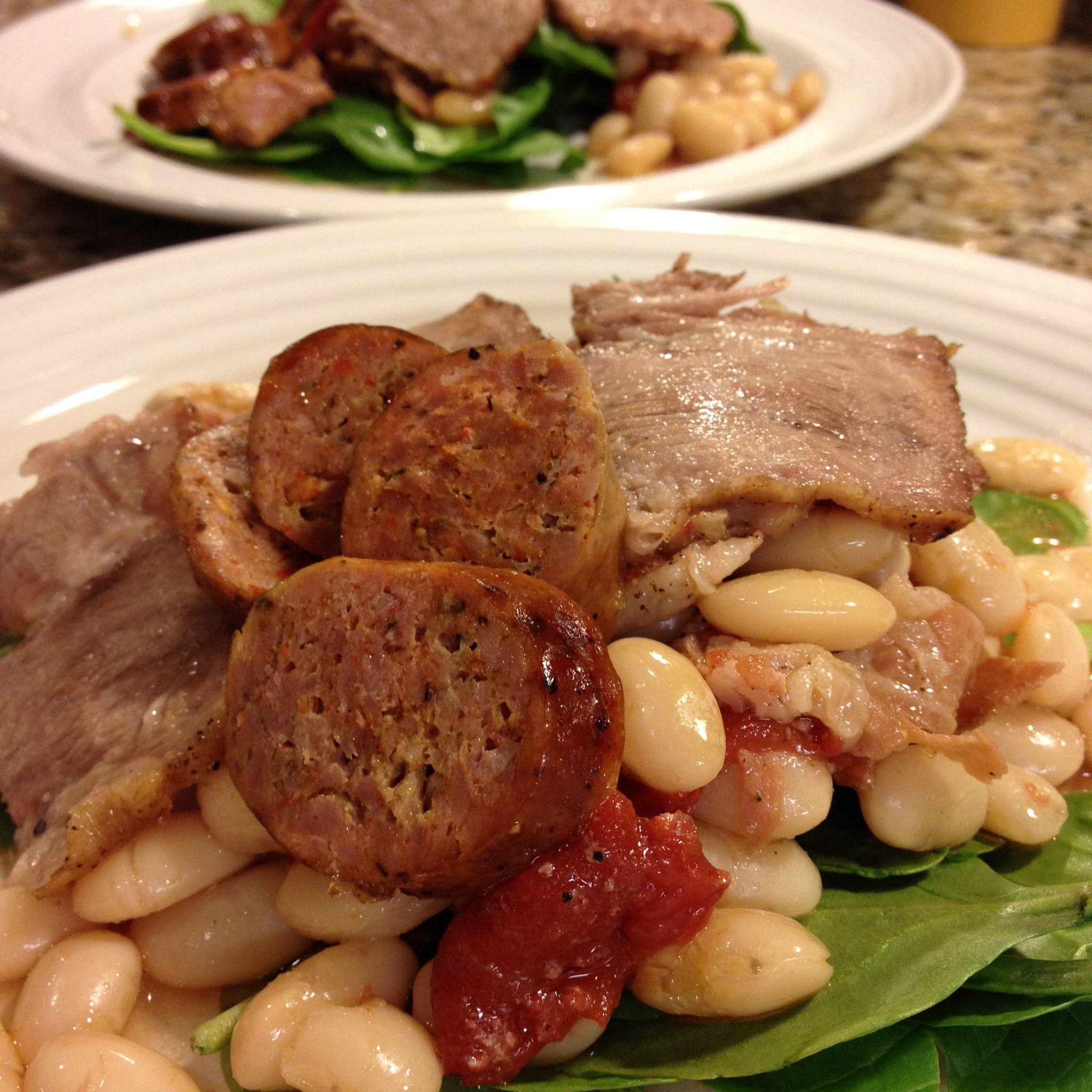
Fagioli alla Fiorentina
Speaking of traditions …
This year, New Year’s Day fell on a Sunday, which means our most recent pork-centric Sunday dinner took on a familiar, annual theme. Why I started making this Italian pork-and-beans dish to celebrate the new year, I do not remember. I think at one point I may have claimed New Year’s Eve or Day as my holiday to spend in the kitchen preparing a fabulous dinner. At some point, I also may have claimed — hoping on some level — that I simply must be part Italian, though none of my ancestors were from anywhere near the Mediterranean. I do remember making fagioli for the first time on a cold a New Year’s Eve in Salt Lake City, and I’ve made it many years since, in Chicago, in Venice and now in Portland. My recipe combines two versions I found in Saveur magazine (November 2000), and while the ingredients are few and simple, the aroma from the oven is comforting, warming, homey.
Why we have not made this for any other occasion is beyond me; it’s the essence of a one-pot meal, and incredibly easy to prepare. In the past, I’ve used only sausage as the accompanying meat, but this year we decided to braise pork shoulder with the beans. Next time we make it, I’d love to play with the ingredients and perhaps substitute pork with lamb, and sage with thyme or rosemary.
Fagioli alla Fiorentina
1 pound dried cannellini beans (or any dried white beans)
5 ounces prosciutto cut into wide strips
Generous drizzle (1/4 cup) fruity olive oil
4 to 5 canned plum tomatoes, quartered
4 cloves garlic, peeled and crushed
2 spicy Italian sausages
1 pork shoulder (about 2 pounds)
Sprig of fresh sage
Salt and freshly ground black pepper
Put the beans in an earthenware pot or a dutch oven, and cover with cold water. Set aside and let soak overnight or at least 4 hours. Drain and add cold water to just cover the beans.
Preheat the oven to 375 degrees.
In a skillet drizzled with olive oil, lightly brown the sausages. Remove and set aside. Salt and pepper the pork shoulder, then using the same pan, brown it on all sides. Remove and set aside.
Add the prosciutto, tomatoes, garlic and sage to the beans, and season to taste with the salt and pepper. Drizzle with olive oil. Place the pork shoulder in the center of the beans, gently working it into the liquid until it’s partially submerged. Place the sausages atop the beans as well.
Cover and bake until the beans have absorbed all the liquid and are tender, about two hours. A meat thermometer placed in the center of the pork should register 160 degrees. Remove the pork shoulder and the sausages and cut into slices. Serve beans and pork in bowls or deep plates with perhaps a good crusty bread to sop up any juices.
Favoloso, no?
Now Open (Again): Aviary
January 1, 2012
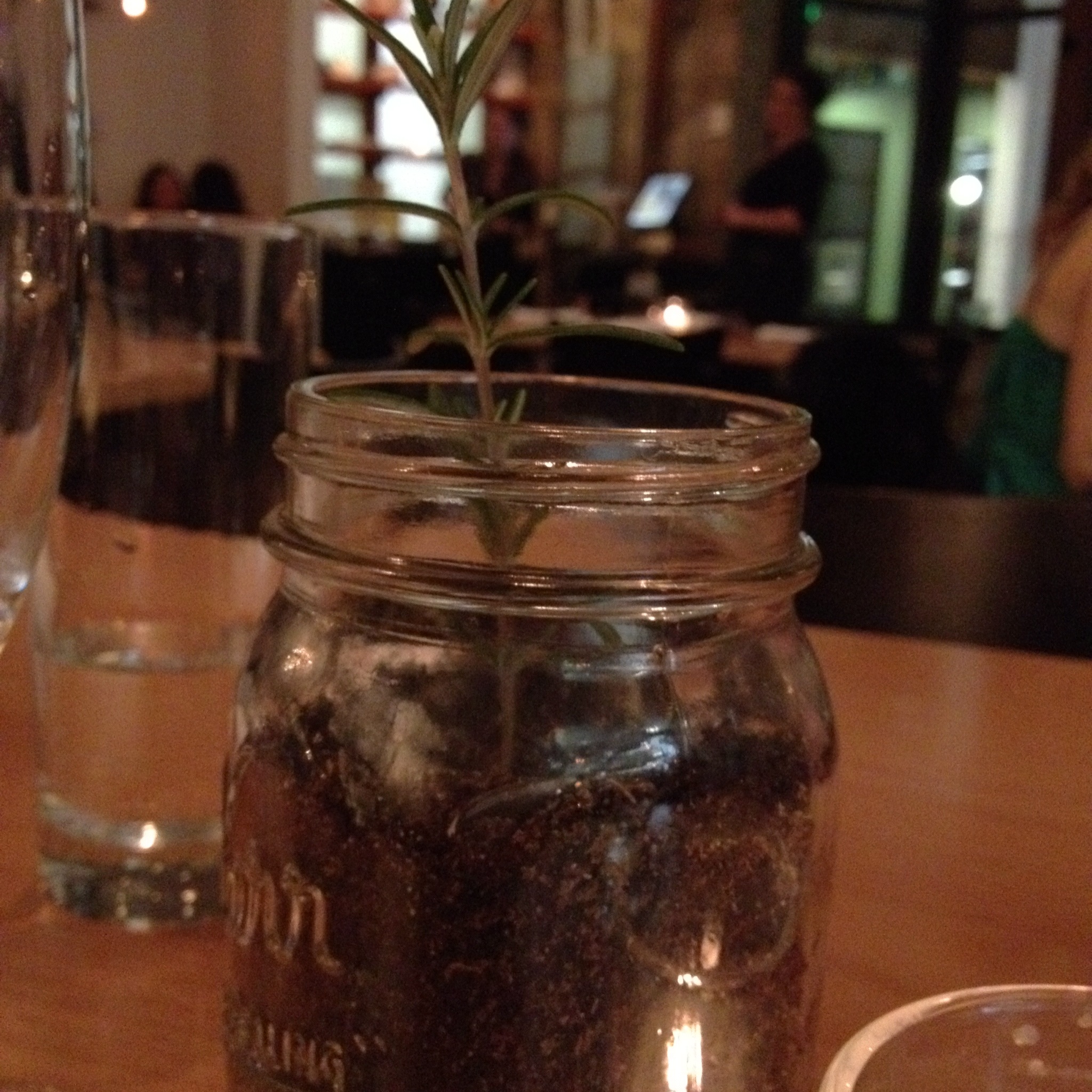
Kerr canning jars with a sprig of rosemary are part of the table settings at Aviary.
Aviary is finally open again, months after a July 4th roof fire shuttered the chic small-plates eatery on Alberta Street. The space looks basically the same except for the addition of a sleek bar in back, much appreciated if you must wait for a table. Just as before, the menu features beautifully composed dishes with nicely balanced flavors. As before the fire, our only complaint is the sometimes-spotty service.
Nevertheless, we consider ourselves lucky to have Aviary back in the neighborhood, and we look forward to many more dinners. Here are some photos from our New Year’s Eve prix-fixe dinner.
Tradition: Christmas Pudding
December 26, 2011

Steamed pudding in its mold.
I cringe a little bit when I hear myself say, “I’d like to start a new tradition,” well aware that an act doesn’t become tradition until it is repeated so many times it is unnatural not to do it. My Grandma Dorothy upheld her family’s special-occasion tradition of serving czernina, the Borusheski version of the Polish duck soup, using the same green plastic teacup year after year as a soup ladle. My dad has maintained his father’s tradition of making the Hungarian káposztája, stuffed cabbage leaves, every New Year’s Day. J and I have a few traditions of our own, but starting a new tradition is tricky business: Sometimes they stick, sometimes they don’t. And there are few things lamer than hearing yourself say, “What ever happened to that tradition?”
Last year I did start what I hope will become a long-standing tradition: Christmas pudding. The recipe I use comes from Nigella Lawson’s book Feast. I first tasted “figgy pudding” when a former co-worker brought one to a holiday potluck, and immediately I knew I must try this recipe. Sweet, but not too much so. Dense, sticky and rich with layers of flavor. Is that chocolate? Is it a cake? Is it a fruitcake? And that dollop of rum butter? Oh man.
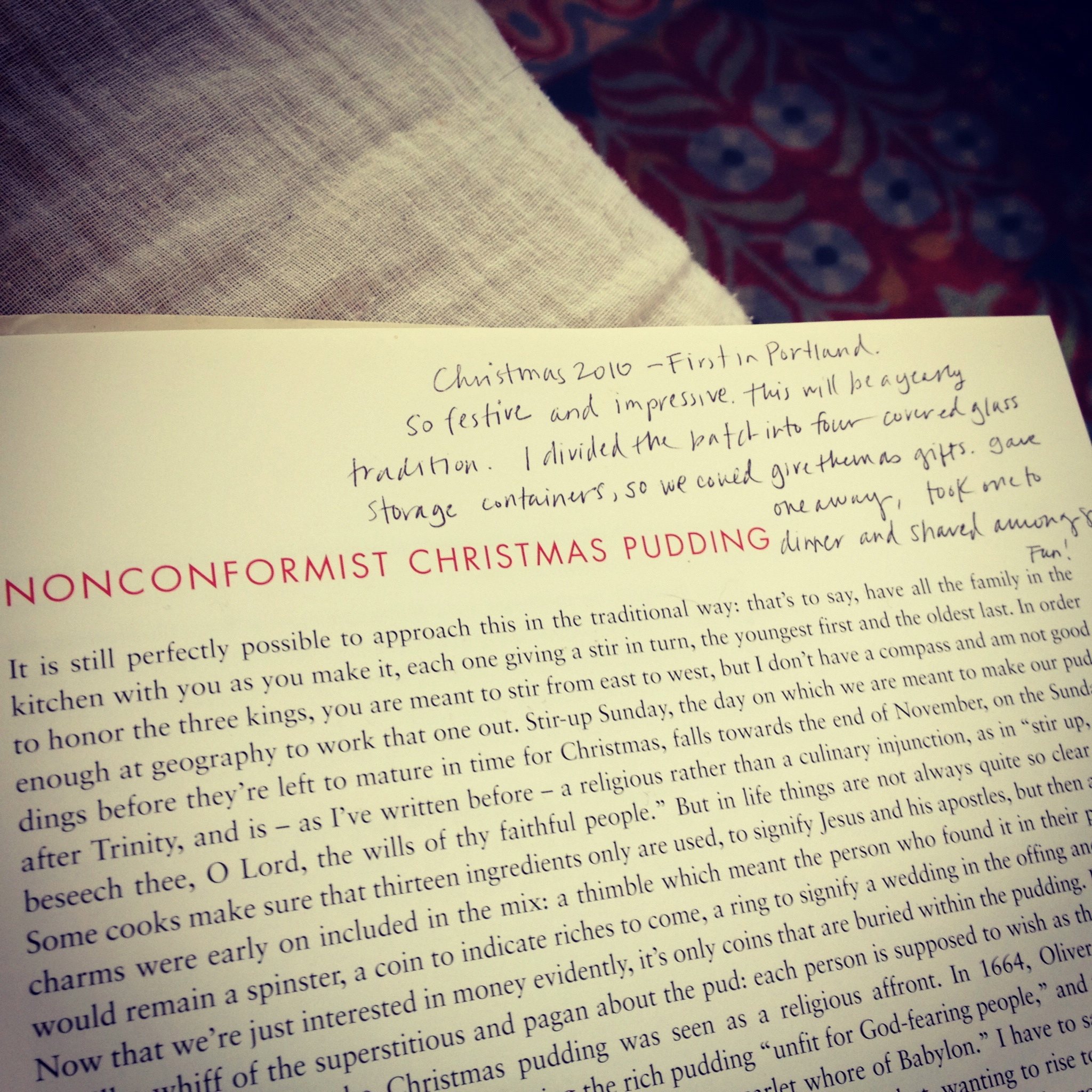
My copy of "Feast." I wrote that this will be a yearly tradition, so it must be so.
So the weekend after Thanksgiving, I make the puddings. I follow Nigella’s recipe faithfully, though it could be easily tinkered with. And because I don’t have a traditional pudding-steaming vessel I divide mine into four or five smaller glass containers with covers. The smaller portions make easy gifting and are easily stackable in the refrigerator. I skip the addition of the coins and tokens, which signify good luck, mostly because of laziness. Instead I send our good wishes along to everyone who enjoys the dish.
Nigella Lawson’s Nonconformist Christmas Pudding
2 cups dried mission figs
1 cup dried blueberries
1 1/2 cups currants (or dried cranberries, in a pinch)
3/4 cup Kahlua
1 1/2 sticks unsalted butter
1 cup ground almonds
2 cups breadcrumbs
1/2 cup cocoa
2/3 cup all-purpose flour
1 teaspoon baking powder
1/2 teaspoon baking soda
1 cup packed brown sugar
2 apples
3 large eggs
1/2 cup sour cream
1 tablespoon pure vanilla extract
1/2 tablespoon pie spice
1/2 teaspoon ground nutmeg
1 teaspoon ground cinnamon
1/4 teaspoon ground cardamom
1/2 cup vodka
Generously butter the steaming vessel(s) and lids.
Grind the figs in a food processor and put them in a saucepan with the blueberries, currants and Kahlua. Bring to a boil and let simmer for 10 minutes. Cut the butter on top of the simmering fruit and put the lid on, leaving it to simmer and melt for another 10 minutes.
Put the breadcrumbs, ground almonds, cocoa, flour, baking powder, baking soda and brown sugar into a large bowl.
Peel, quarter and core the apples and, as Nigella says, “bung” them in the still-figgy food processor until finely chopped. Add them to the bowl of dry ingredients along with the buttery dried fruit mixture. In the same unwashed food processor, break the eggs and add the sour cream, vanilla and spices. Process to mix and pour into the pudding, scraping the sides to get all the leftover bits. Mix well with a spoon, and pour into the prepared steaming vessels. If you’re using covered glass containers as I do, be sure not to overfill, as the pudding expands as it steams.
Now for the steaming: Because I make several smaller puddings, I arrange mine in a large canning pot, resting them on the rack. Cover and steam for four hours, checking the water level periodically. After four hours, turn off the heat and allow them to cool in the pan. Transfer the puddings to the refrigerator. (Some people allow them sit on the kitchen counter.) The more time you allow them to mature the better, which is why these are traditionally prepared toward the end of November. (That lazy Thanksgiving weekend, therefore, is the perfect time.)
The day you want to eat the pudding, steam it for another 1 1/2 to four hours — the longer it steams, the richer it will be. (A friend of mine steamed hers in a crock pot — a great tip.) Unmold the pudding by inverting it onto a plate, and stick a sprig of holly on top. In a saucepan, warm the vodka and strike a match to light it and pour over the pudding. “Then,” Nigella writes, “in absolute discordance with all possible health and safety initiatives, bearing it aloft make a dash for the dining table so everyone can see this fabulous, flickering spectacle.”
Makes me smile every time I read it.
Serve with rum butter.
Rum Butter
1 1/2 cups confectioners sugar
1 stick unsalted butter, softened
1/2 cup ground almonds
1/2 teaspoon vanilla extract (my addition to the recipe. Optional)
3-plus tablespoons good-quality rum (to taste)
Put the sugar in the food processor and process to remove any lumps. Add the softened butter and cream it with the sugar. Scrape down the sides, add the ground almonds and process again. With the motor running, add the vanilla and the rum to taste. Taste as you go along. I prefer more rum in my butter, but some might find my preference too strong for their liking.
Merry Christmas to all, and to all a good night.
Sunday Dinner: Old-Fashioned Meatloaf and Spaghetti Squash Gratin
December 11, 2011
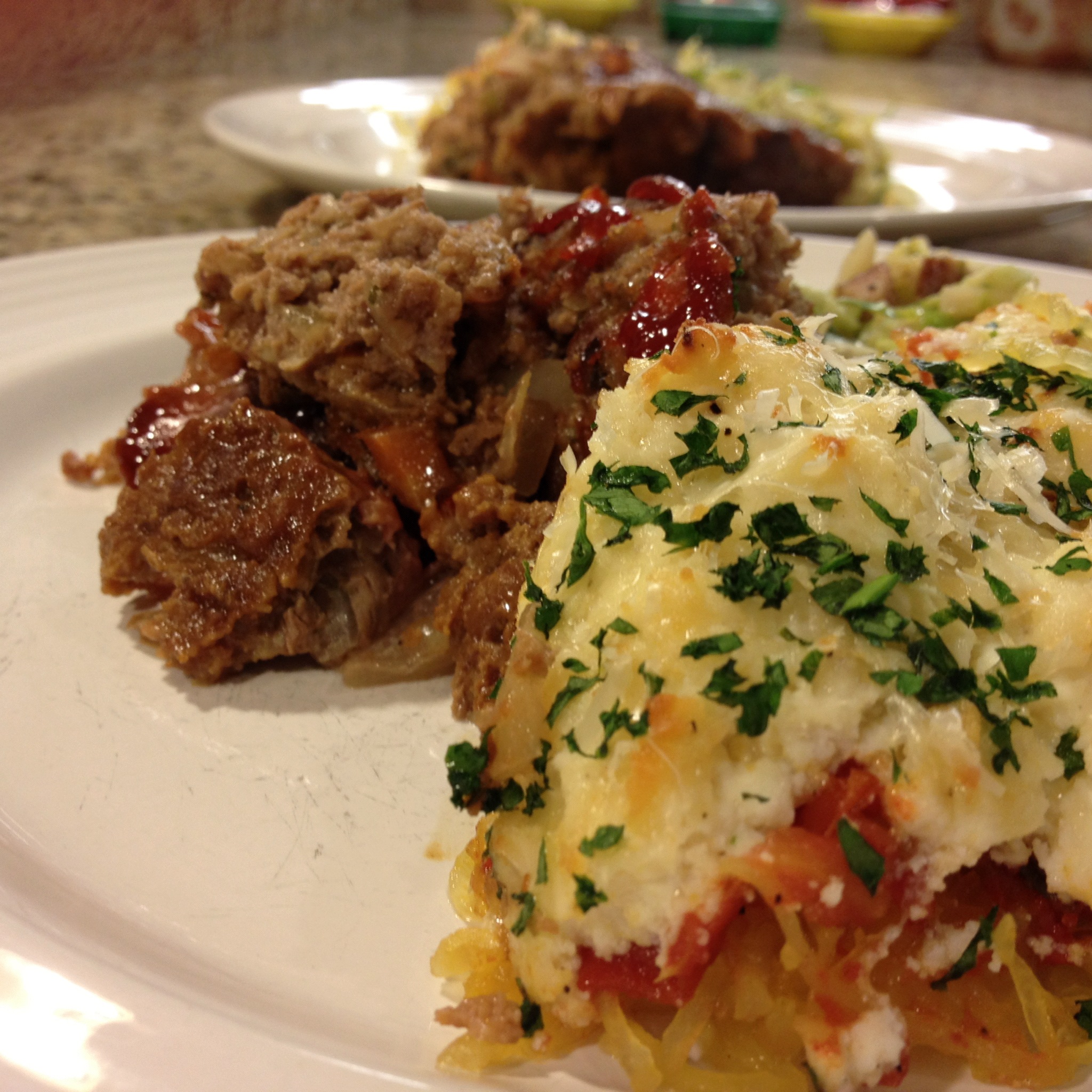
Warm and comforting meatloaf and spaghetti squash gratin.
I can’t say meatloaf was my favorite food growing up. By my logic, if you were going through the trouble of hand-shaping ground beef, why not make meatballs (with spaghetti, duh)? And, if I remember correctly, the meatloaf of my childhood was usually accompanied by some objectionable vegetable like broccoli, adding insult to my pasta-less injury. (No disrespect to my mother’s meatloaf, of course. It just did not appeal to young palate. People change. Love you, Mom!)
A few year’s back, in the midst a dangerous, experimental mac-and-cheese stage (old habits die hard), I was perusing my cookbooks for an accompaniment to what I considered the night’s gooey, cheesy main attraction. That’s when I ran across a recipe for old-fashioned meatloaf in my golden go-to, The Gourmet Cookbook. A departure from the meatloaf Mom baked in bread loaf pans, this version was mounded free-form into an oval dome on baking sheet and slathered with ketchup. It sounded interesting enough, so we gave it a try, and a few year’s later it’s now a wintertime staple. While I have served this many times alongside a creamy pot of macaroni, it’s a star in and of itself. On a recent Sunday, though, a spaghetti-squash gratin was the side to what I consider to be a magnificent meatloaf. Pasta-less and still craveable? Whoodathunk it?
Old-Fashioned Meatloaf (Adapted from The Gourmet Cookbook)
2 cups onions, finely diced
1 rib celery, finely diced
2 carrots, finely diced
3 green onions, minced
2-3 large cloves garlic, minced
2 tablespoons olive oil
2 teaspoons salt
2 1/2 teaspoons freshly ground pepper
2 teaspoons Worcestershire sauce
2/3 cup ketchup
2 pounds lean ground chuck
1 pound ground pork
1 cup dried breadcrumbs
2 eggs beaten lightly
1/3 cup fresh Italian parsley, chopped
Preheat oven to 350 degrees F.
In a heavy skillet over medium heat, sautee the onions, celery carrots, green onions and garlic in olive oil for 10 minutes, stirring occasionally until the onions are translucent and the carrots are tender. Season with salt and black pepper. Add the Worcestershire sauce and 1/3 cup ketchup and stir, cooking for one additional minute. Remove from heat.
In a large bowl, combine the the beef, pork, eggs, breadcrumbs and parsley. Incorporate the vegetable mixture into the meat, mixing with your hands. (Don’t over-mix.) Turn the meatloaf mixture onto a shallow baking pan, forming it into a mounded oval, about 10 by 5 inches. Spread the remaining 1/3 cup ketchup on the top. Bake in the oven for 1 hour or until the internal temperature reads 155 degrees. Remove from oven and loosely cover with foil. Let the loaf rest for 10 minutes before slicing.
Spaghetti Squash and Tomato Gratin (Adapted from Cooking Light)
1 medium spaghetti squash
3 tablespoons olive oil
1 28-ounce canned whole tomatoes, drained and chopped
3 sprigs fresh oregano
3 sprigs fresh thyme
3 cloves garlic, minced
1/2 teaspoon crushed red pepper
1 15-ounce tub low-fat ricotta
1/2 cup fresh grated Parmigiano-Reggiano
2 teaspoons chopped fresh oregano
1 teaspoon chopped fresh thyme
1 teaspoon salt
Fresh ground pepper
With a small, sharp knife, pierce the surface of the squash about 1-inch deep to prevent it from bursting. Put the whole squash in a microwave and cook on the highest setting for 6 to 7 minutes. Using oven mitts, turn the squash over and cook for an additional 8 to 10 minutes, until it feels slightly soft when pressed. Remove the squash from the microwave, and allow it to cool. Cut the squash in half lengthwise, and remove and discard the seeds from the middle. Run the tines of a fork through the flesh creating long spaghetti-like strands. (Should yield about four cups.) Set aside. (This step can be done ahead.)
Preheat oven to 400 degrees.
In a heavy saucepan, heat the olive oil over medium heat and add the garlic. Cook stirring for 1 minute. Add the tomatoes, crushed red pepper, oregano sprigs and thyme sprigs. Add salt and pepper to taste, and simmer for 20 minutes until thickened. Remove and discard the woody stems of the oregano and thyme. Set aside.
In a bowl, combine the ricotta and the Parmigiano-Reggiano. Add the chopped oregano and thyme and season with salt and pepper.
In a 9 by 13 casserole, make a base layer of spaghetti squash. Follow with a layer of tomatoes, spreading evenly over the squash. Top it off with the cheese mixture. Bake at 400 degrees for 50 minutes, or until lightly browned on top.
(Alternatively, you can layer the squash, tomatoes and cheese in eight 8-ounce ramekins as called for in the the original recipe.)
-

- Comforting meatloaf and spaghetti squash gratin.
-
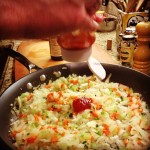
- The adding of the ketchup.
-
- Mixologist at work.
-
- Ground goodness awaits.
-
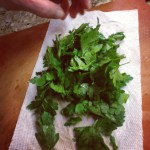
- Fresh Italian Parsley.
-
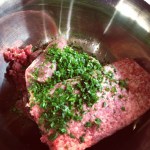
- Parsley, breadcrumbs, eggs. Mixing commences.
-

- In goes the veg.
-
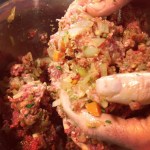
- Hand mixing.
-
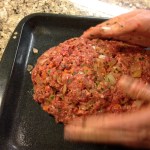
- The shaping of the loaf.
-

- Loaf with the secret ingredient: ketchup.
-

- A thing of beauty.
-

- A little mouse?
-
- Hoping beyond hope: Perhaps something will fall.
-

- Warm and comforting meatloaf and spaghetti squash gratin.
Willamette Valley Wine Tasting: Thanksgiving Weekend
November 26, 2011

The view of Red Ridge Farms' lavender fields.
The day after Thanksgiving, and the Christmas spirit had burst out of its bulging seams. Everywhere we turned were red, green and glittery decorations, miles of twinkling lights and of course, endless television commercials. But rather than join the Black Friday throngs, we headed toward wine country for a little holiday cheer of our own.
Thanksgiving weekend is an event for the Willamette Valley wineries, and most host open-house style functions with tasting tables set up in their cavernous barrel-laden storage rooms. We stopped at three wineries on Friday (Lange Estate, De Ponte Cellars and Argyle) plus we made a little side trip to Red Ridge Farms’ gift shop and nursery for olive oil. (Hint: If you’re looking for a gift for the food lover or gardener in your life, Red Ridge is a good bet. Tons of creative options for the cook or home entertainer, but if all else fails, locally pressed olive oil is always a welcome gift.)
We were lucky to have a gorgeously crisp, sunny day, and the indoor/outdoor tasting setups lent a festive note to the start of the season without being overbearing. I may be mentally ready to go Christmas tree cutting.
Bar Lolo: New Look, Updated Menu
October 18, 2011

Bar Lolo's new look.
Hey, Lolo! (Sorry … Bar Lolo.) So great to see you the other night. It’s been a while, and we have to say you are looking good. Really good. You’ve taken some time to focus on yourself, and it has paid off.
It looks like you’ve kept the best of what attracted us to begin with, and made a few small, but standout changes. First, we adore the pops of color — those coral-crimson chairs and bar stools, the wall of colorful paella pans and the natural wood wine holder really stand out against the cool putty colored walls and floor. And the blinged-out longhorn cow skull over the door proves you haven’t lost your sense of humor. We’re also totally digging the fact that you’re really getting back to your tapas-bar roots. The high wooden tables along the window scream Madrid. I see J and I and our fellow neighborhoodies dropping in after work for a glass of Albariño, cider or a cocktail, and a few small bites before a night on the town.
You’ve also made a few positive changes to the menu. We sampled quite a few tapas last night, including our longtime favorite shredded romaine salad, but I have to say, those specials you whipped up: Warm mission figs topped with Serrano ham and Gorgonzola? Are you kidding me? I thought I’d died and gone to heaven with that salty-sweet medley. I’m so glad we placed a last-minute order for the special paella croquettes — crispy fried spheres, perfectly proportioned, oozing with hot saffron-scented paella, chicken and shrimp in the middle. Incredible. We also love that you ditched the full-size burger in favor of delicious mini lamb sliders. Such a treat. And though we didn’t need them, we could not resist the piping-hot churros with chocolate and honey dipping sauces. You really outdid yourself.
It was good catching up, Lolo. You look good, and you seem to have your groove back. The makeover has done done wonders, and I hope it gets you the attention you deserve. Maybe we can hang out sometime?
Food Memory: Slow-roasted Tomatoes
October 8, 2011

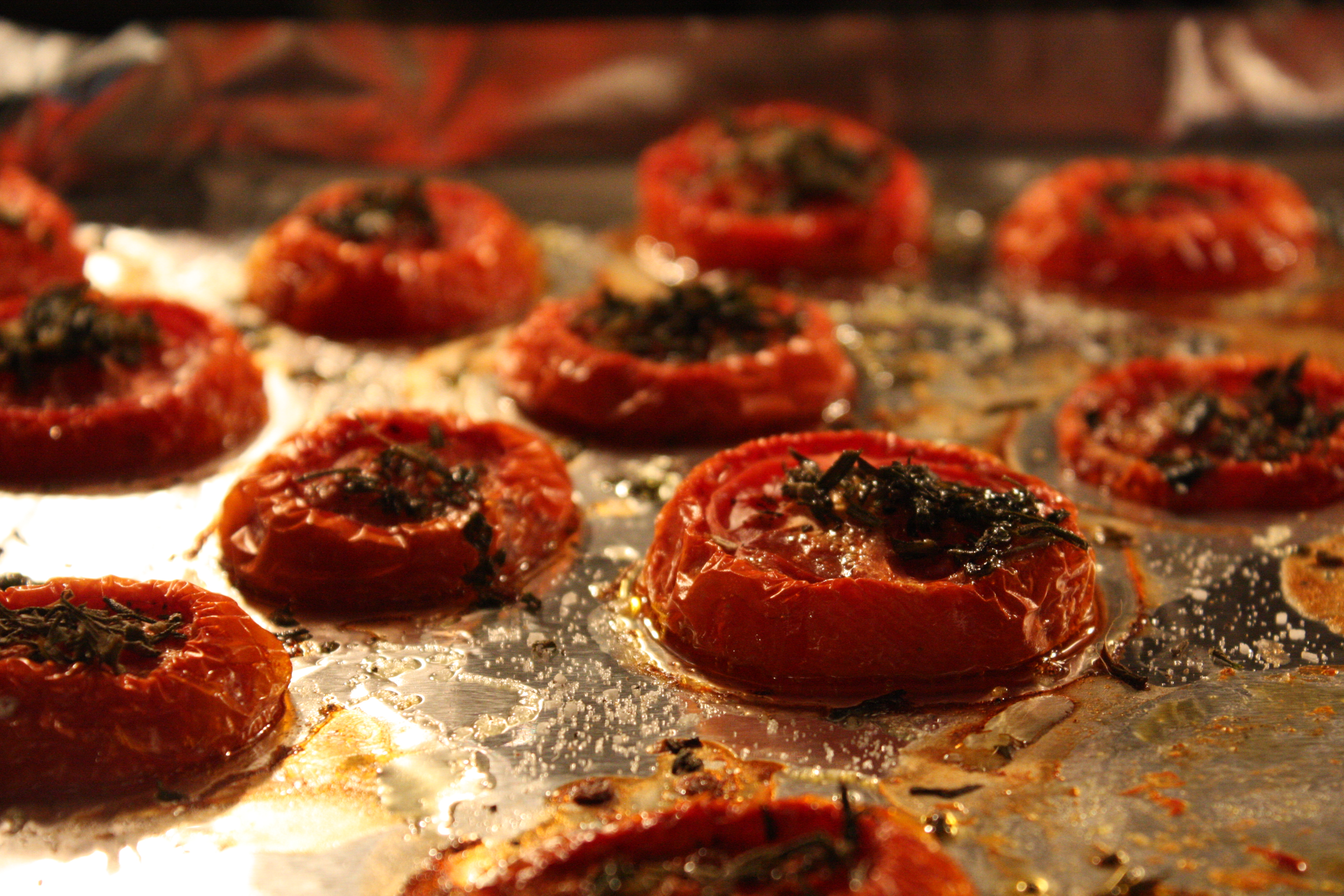
Caramelized, roasted tomatoes topped with fresh rosemary and thyme.
In Salt Lake City, J and I lived in a sweet little Victorian cottage in the 9th and 9th area. The house itself was a charming brick structure with a large backyard, and a good-sized, sun-soaked garden perfect for growing tomatoes and herbs. I’ve never considered myself a gardener, but somehow growing delicious tomatoes in the hot, arid Utah summers took little effort or skill. As long as you got them in after Mother’s Day, kept them watered and guarded against late frost and pesky snails, they pretty much grew themselves.
Starting around mid-July, we’d start enjoying the ripening Early Girls, Beefsteaks and Roma tomatoes in salads, fresh tomato sandwiches and pasta sauces and by September, you couldn’t turn around without stepping on a tomato. Well, now, where did you come from, my pretties? So plump and delicious, the mouth waters. All the better to eat you with!
Sometime in the mid-90s, I came across a recipe for oven roasted tomatoes with fresh garden herbs. Perfect for the end of September when the cricket thrums slow to the tempo of a porch rocking chair, these tomatoes go in a low oven for at least three hours. As they slowly give up their juices, they fill the house with an aroma so herbaceous and now familiar to me, it is a powerful symbol for the arrival of fall, and the comfort of home.
I make these tomatoes at least once a year in the fall, even though it’s been more than 10 years since we’ve had the “problem” of an exploding tomato population. What a shock it was moving to Chicago, and having access only to bland, waxy, hard grocery store tomatoes. Even so, this simple technique vaults even the most anemic tomatoes over the brink of caramelized deliciousness. Incredible on sandwiches, wrapped in a warm corn tortilla or munched straight off the cookie sheet, these gems don’t last for more than a few hours in our house. But if they did, I imagine they’d also be delicious on pizza, in pasta or atop crostini. Ladies and gentlemen: Welcome to autumn.
Slow-roasted Tomatoes
10 to 12 Roma tomatoes
4 tablespoons kosher salt or sea salt
4 tablespoons sugar
1 to 2 teaspoons freshly ground pepper
Extra virgin olive oil
1/2 to 2/3 cup finely-chopped fresh herbs (thyme, rosemary, sage, basil)
Pre-heat the oven to 250 degrees F. Line two cookie sheets with aluminum foil or a Silpat liner. Cut the ends off the washed tomatoes; cut into thick crosswise slices. 1/4 to 1/2 inch wide. (The thinner the slice, the more the tomatoes shrivel. I prefer thinner slices.) Arrange the tomatoes on the cookie sheets, and drizzle each slice with a bit of olive oil. Turn the slices over, and repeat on the other side.
Mix the salt, sugar and pepper in a small bowl. Sprinkle a large pinch of the mixture on each tomato slice. Sprinkle on herbs.
Roast for three hours or until the tomatoes start to dehydrate. (If your slices are thicker, they can stay in longer. Just don’t let them burn.) Or, roast for two hours , turn off the oven, and leave overnight.
Refrigerate in an airtight container — that is, if they last that long.
-

- Caramelized, roasted tomatoes topped with fresh rosemary and thyme.
-

- Store-bought tomatoes, unfortunately.
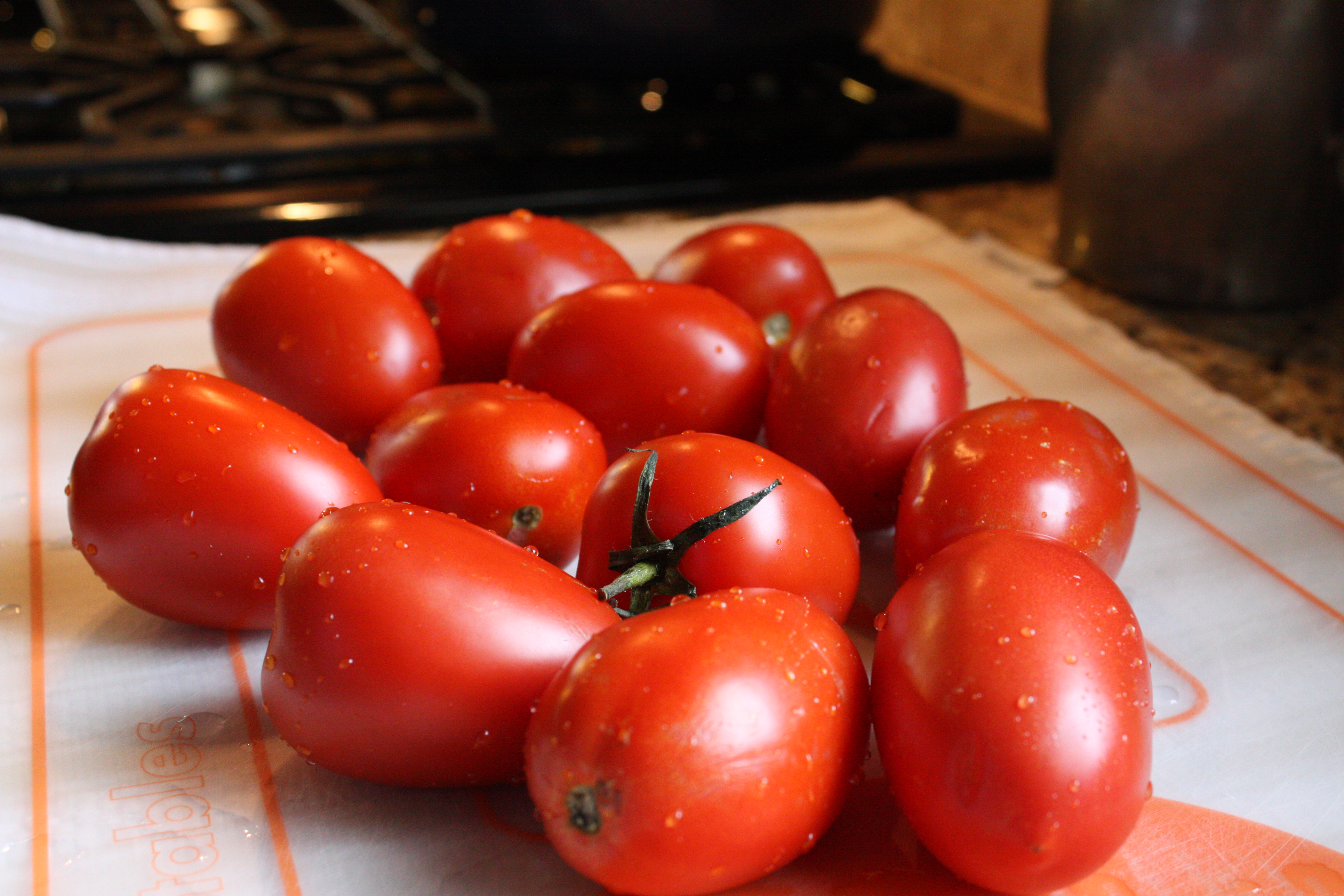
-

- Thick-sliced Roma tomatoes, ready for roasting.
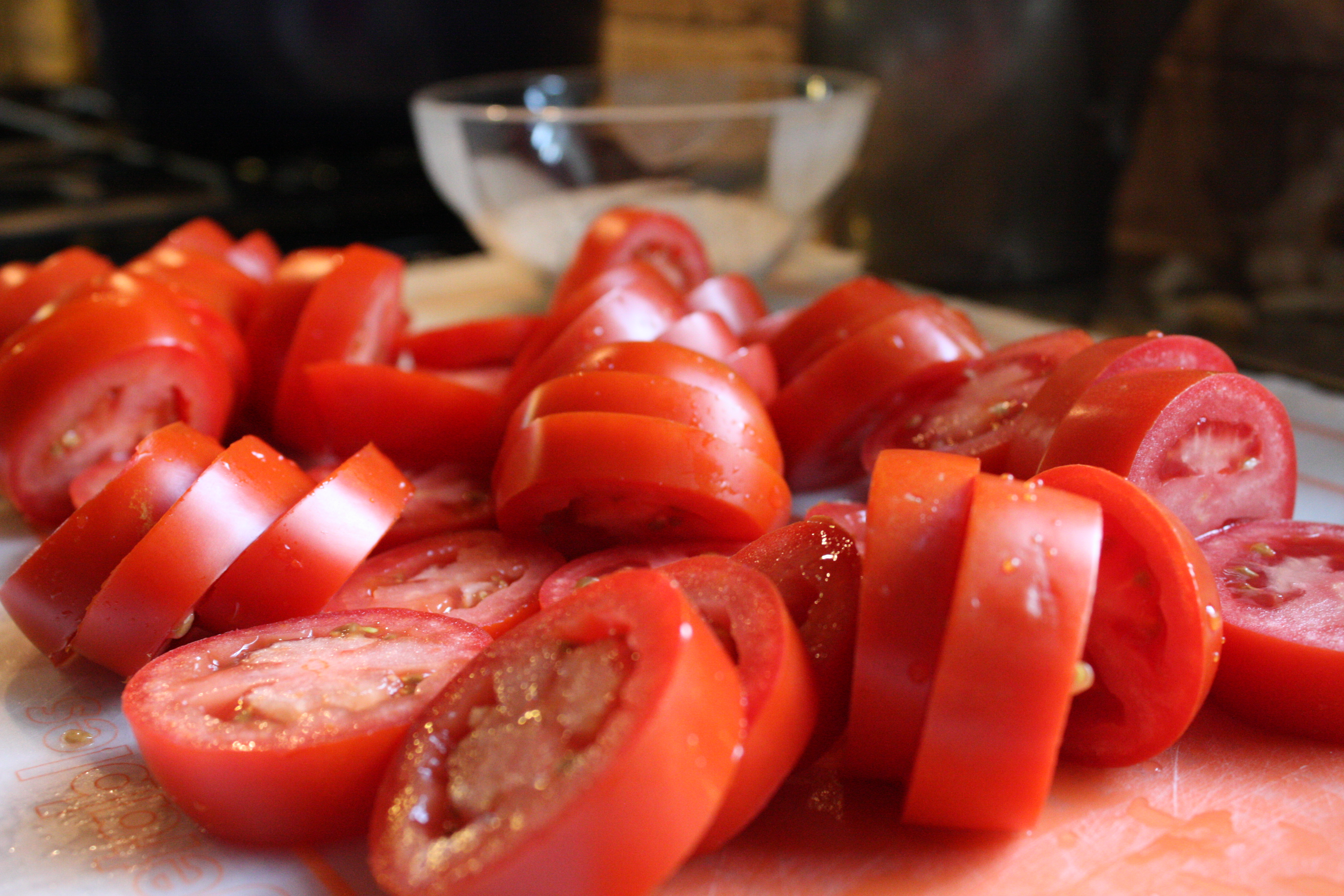
-

- Drizzled with olive oil.
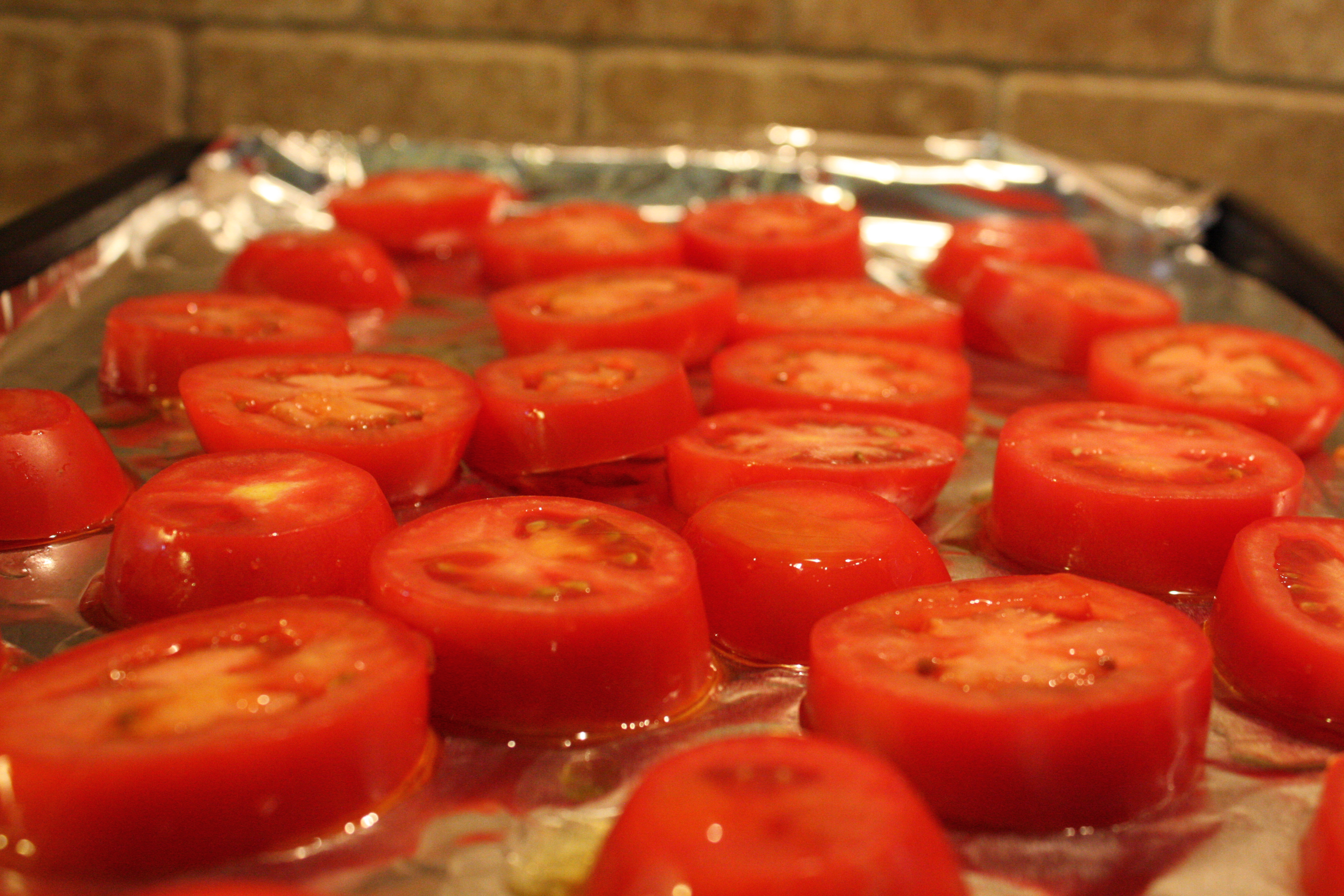
-

- All dressed up and ready for the oven.

-

- Tomatoes in the oven, smelling delicious.
A Perfect Saturday: Wine Tasting and Dinner at Tina’s
September 4, 2011

Chinook salmon with corn, zucchini hash.
Labor Day weekend: Three gloriously lazy days lay out in front of us like a well-fed housecat on a hot day. And what better way to start a long weekend than a leisurely day of sipping local wines, followed by an intimate dinner with family.
Saturday was warm and windy, and wildfires in Central Oregon and near Mount Hood made the already-soft September light that much more hazy. The views promised by the latest edition of Portland Monthly were sure to be obscured by smoke. Undeterred, we — J, Zandra, James and I — met in Tualatin and started our excursion. We headed first to Penner-Ash Wine Cellars, with sweeping views of the Chehalem Valley from the patio overlooking the well-tended garden. We sampled Viognier, Pinot Noir, Syrah and Rubeo, and toasted our good fortune at living in such a beautiful place. Next, it was on to Trisaetum (pronounced tri-SAY-tum), an elegant winery/art gallery with a stunning barrel cave in the basement. After that, we stopped at Lemelson and Anne Amie wineries, picking up more Pinot Gris, dry Riesling and Pinot Noir along the way. Happily we bumped down the dusty gravel roads, our wine-laden trunk weighing heavily behind us.
Not the most strenuous activity, wine tasting nevertheless piques the appetite, so at 5:30, we headed to Tina’s in Dundee for an early supper. The cozy dining room has a cottage feel with soft yellow walls, sunny windows and a central fireplace. Crisp white table linens add a refined note to the otherwise casually intimate space, which fills up fast, even early in the evening. The menu showcases local and seasonal products, of course, so in keeping with our day, we started off with a Cristom Estate Pinot Gris to complement our starters: grilled calamari on a bed of greens; a glorious, generous slice of country duck pate; and pan-fried Yaquina Bay oysters with sorrel sauce, the oysters so tender they dissolved on the tongue.
The next course offered a choice of the house salad or corn soup, a sweet, creamy burst of color that tasted like sunshine, and evoked the childhood memory of creamed corn.
For entrees, Zandra and I ordered the Chinook salmon, seared crisp and served atop a corn, zucchini and pancetta hash with silky fennel puree beneath. Summer … Pow! James had the tenderloin with roasted fingerlings, porcini and a darkly rich demi glace — delicious flavors, but unfortunately the beef arrived cooked beyond the requested medium rare. For J, it was the roasted duck breast, cooked perfectly medium rare (in your face, tenderloin), and accompanied by a cabbage and jicama slaw and a crunchy, savory-sweet walnut cornbread.
And dessert: bubbly blueberry cobbler a la mode and, for the chocolate fiends among us, chocolate mousse cake with chocolate truffle ice cream.
Dragging our full bellies and heavy trunk, we headed back to Tualatin where we divided the day’s booty. Family, good food, good wine. One memorable day.
-
- Chinook salmon with corn, zucchini hash.
-

- The smoky view from Penner-Ash.
-

- Penner-Ash Garden view.
-

- Garden at Penner-Ash.
-

- Black-eyed Susan a la Penner-Ash.
-

- The view at Anne Amie.
-

- Anne Amie’s patio.
-

- Inside Tina’s.
-

- Comforting, summery corn soup.
-

- Duck breast.
-

- Blueberry cobbler.
-
- Chocolate lover’s dream.
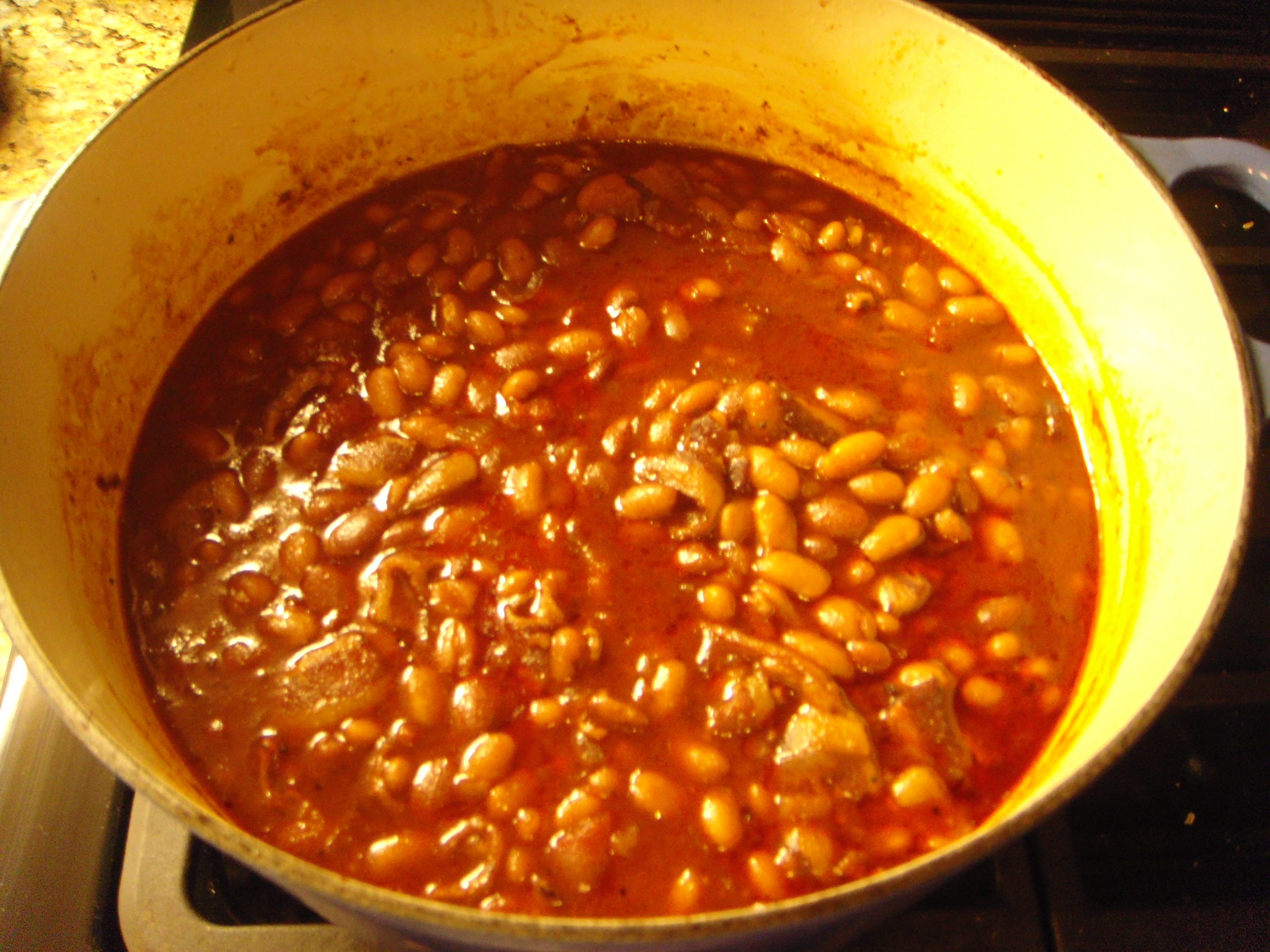
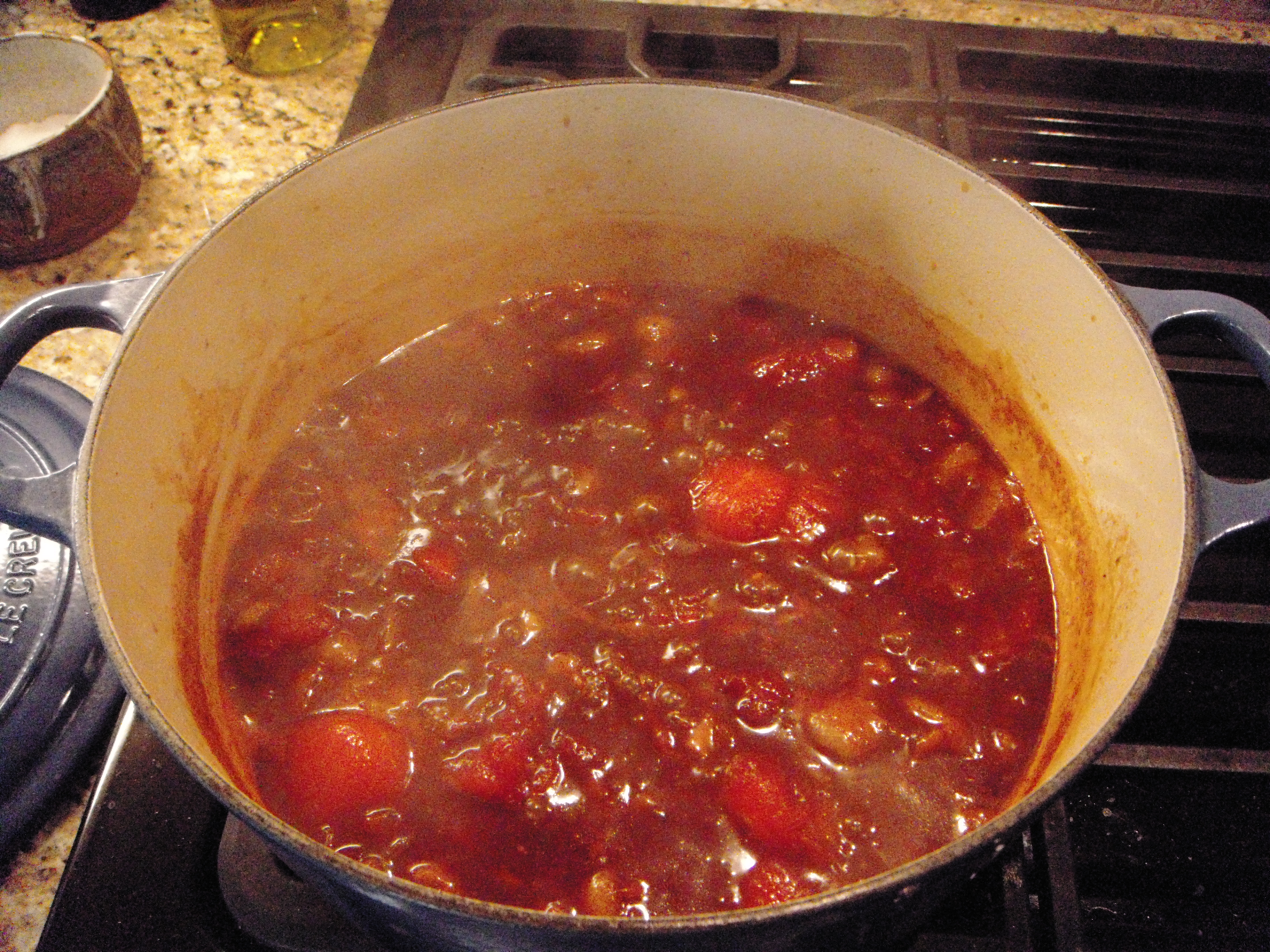
Oven-baked beans, just simmerin' away.
An unusual summer Sunday: J was on call all weekend, and I had signed up for a daylong sewing class in our neighborhood. Meanwhile, J’s mom, Margaret, was scheduled to arrive in the afternoon. And, to top it all off, we had invited James and Zandra over for Sunday dinner. Our Sundays are typically far more relaxed, but this was the exception, and with J being tied to work, the shopping and other dinner preparations were up to me. So, when planning the meal, the mantra was: Keep it simple; make it ahead.
Taking inspiration from the mid-summer edition of Saveur — BBQ Nation — we decided to employ the grill for dinner. And after debating the various grilling options, we landed on sausages made at our neighborhood grocery store, New Seasons. When I told the eager-to-help man at the meat counter our plan to offer a variety of sausages, he said he’d hosted his own sausage feast just a few days earlier, and it was a huge success. Upon his hearty recommendation, I choose the chicken, feta and spinach links (he admitted he didn’t think he’d like them, and was surprised when they turned out to be his favorite). Then I grabbed a couple of basic bratwurst and a few spicy Polish sausages. The main dish was set, and next it was onto sides.
Saveur had featured a lovely summery cucumber salad in the barbecue edition that intrigued me. Thin-sliced, peeled cucumbers and red onion tossed with sour cream and sherry wine vinegar dressing. I made the dressing the night ahead, leaving the cucumber slicing for the last minute. This was easy enough, but in retrospect, I should have sliced and drained the cukes the night before as one does for tzatziki. Noted for next time.
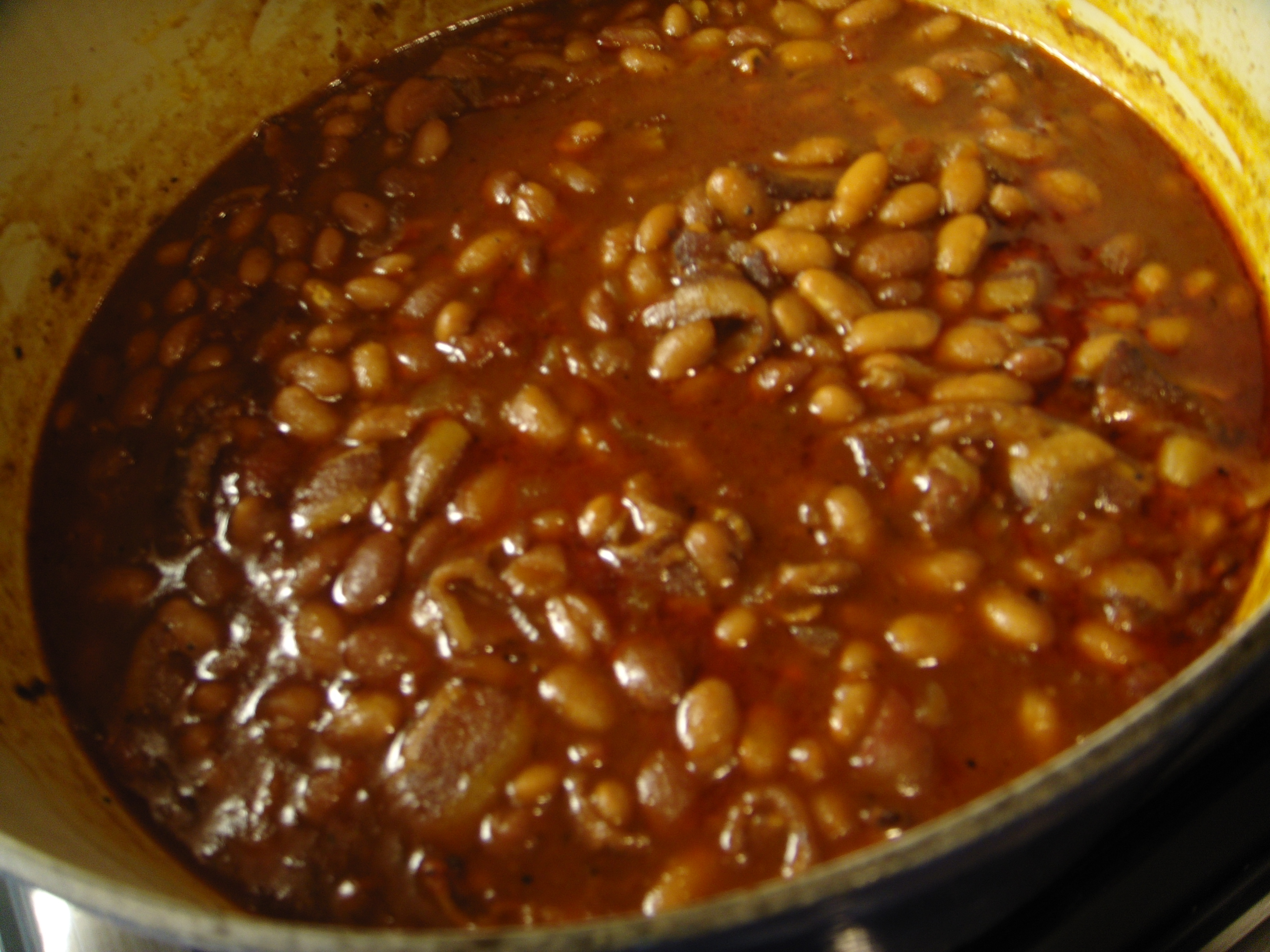
The menu lacked something. We discussed pasta salad and potato salad before finally landing on oven-baked beans, also from the magazine. I’d never baked my own beans, and hadn’t contemplated how making them from scratch would improve the flavor. Of course I should have known. My adaptation adds more onion, less sugar and a touch of bourbon.
Oven-baked Beans
8 to 10 slices bacon, cut into chunks
1 diced large yellow onion
4 15-ounce cans navy beans, drained and rinsed
2 cups barbecue sauce (homemade or store bought)
3/4 cup beef stock
1 cup brown sugar
1/4 cup molasses
1/4 cup bourbon
1/8 teaspoon clove, finely ground
2 teaspoons kosher salt
1 tablespoon dry mustard
6 to 8 whole, peeled canned tomatoes, hand crushed
Preheat oven to 350. Sautee the bacon in a Dutch oven or deep oven-proof skillet until soft, but not crisp. Add the diced onions and cook until translucent. Add the sugar, molasses, bourbon, barbecue sauce, stock, tomatoes, clove, mustard, salt and stir until mixed. Bring the mixture to a boil to thicken slightly. Add the beans and bring to a simmer.
Cover and bake for 2 hours. Let cool before serving.
The beauty of this recipe is that it can be made ahead, and re-heated either on the stove top or in the oven before serving. In fact, making the beans ahead only intensifies the flavors.
Yep. File this meal under easy, rich, slightly sweet and sublimely summer.
-

- Oven-baked beans, just simmerin’ away.
-

- Sweet summer corn.

-

- The ultimate finger food.
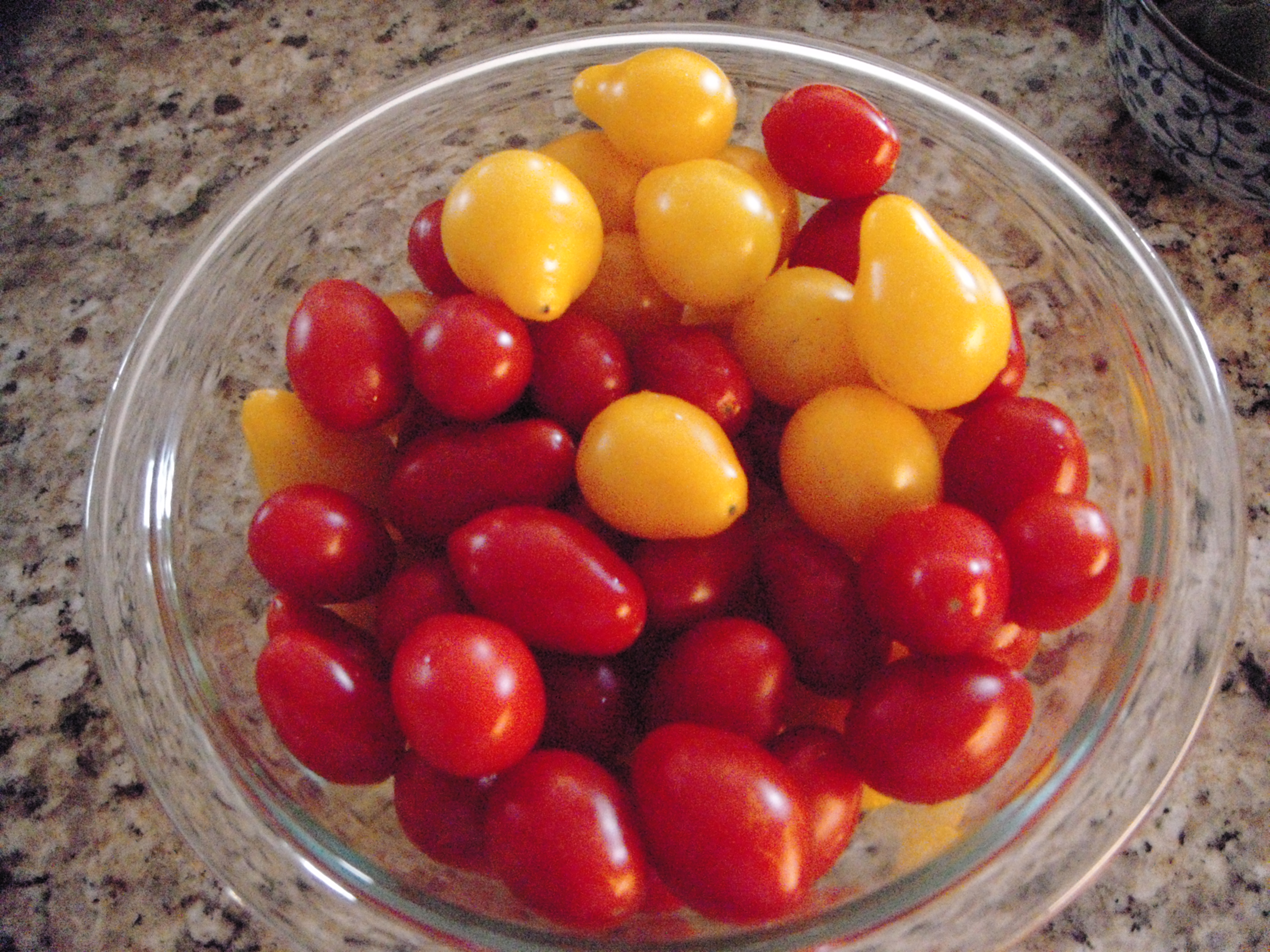
-

- Cucumber salad.

-

- Bacon. Rendering.

-

- + Onions.

-
- The mix pre-beans.
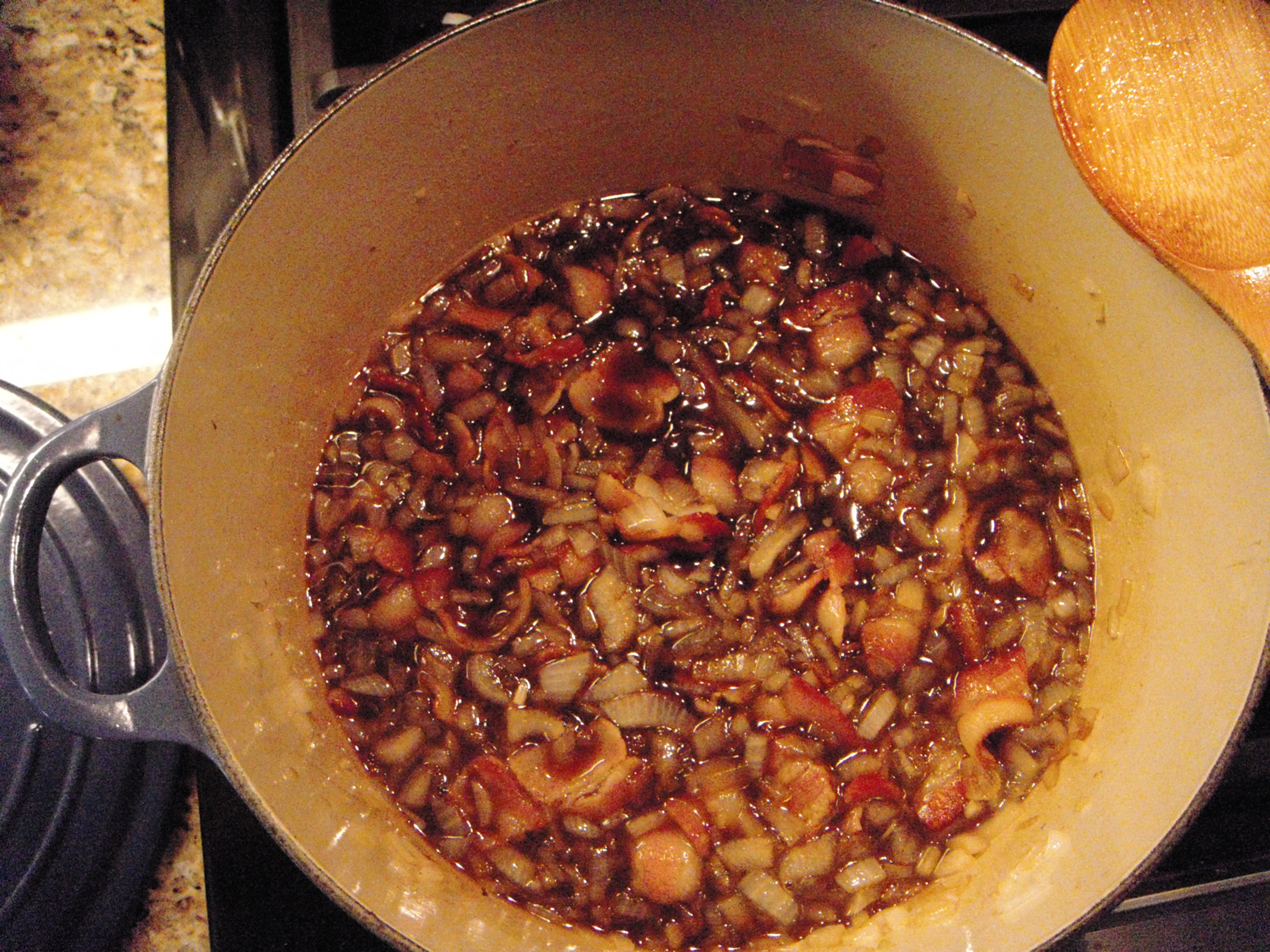
-

- Boil, boil, bubble and simmer.
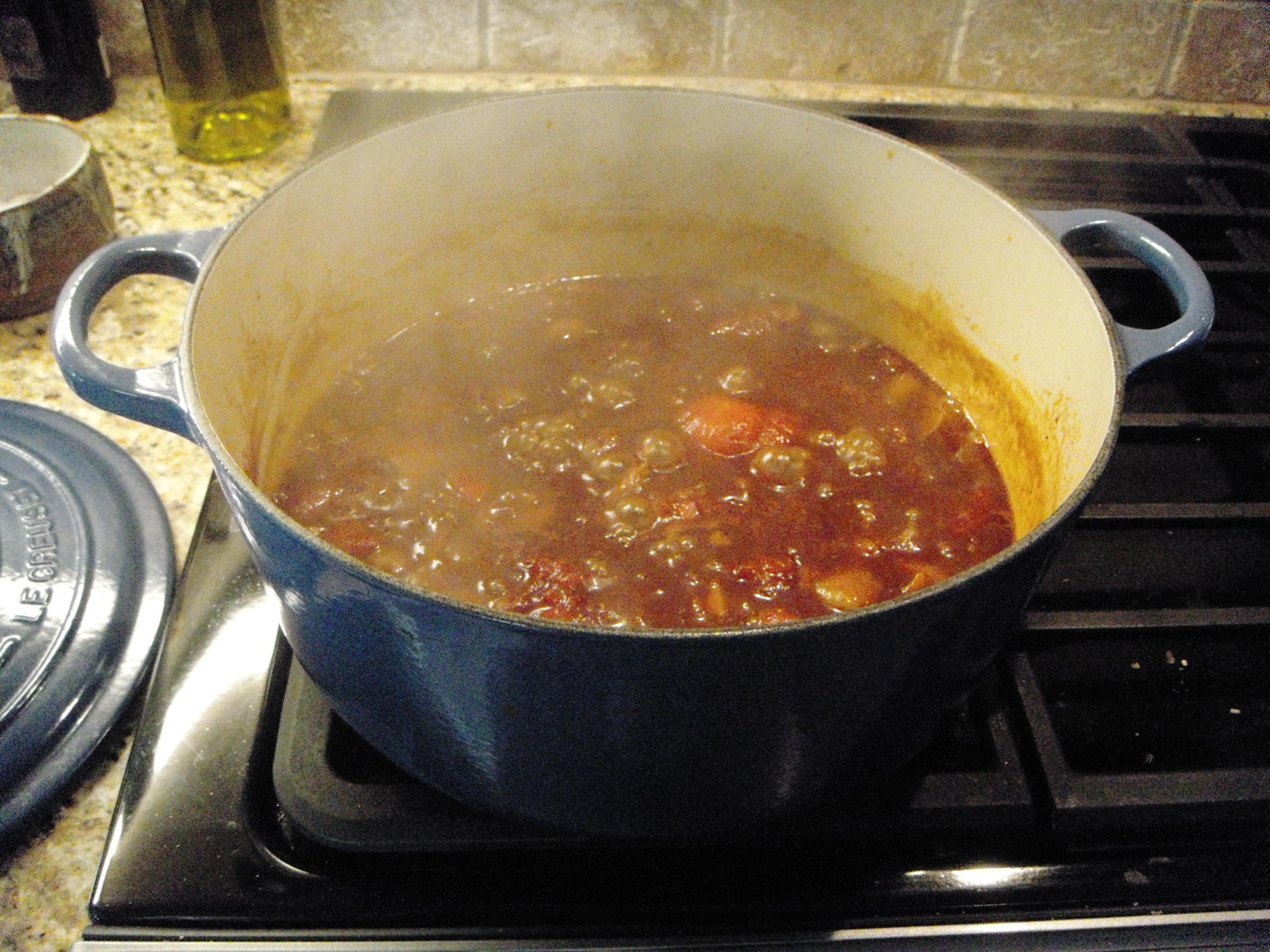
-

- Ready for the oven.
-
- Deeply rich: I give you oven-baked beans.
 Chile Verde Chronicles